

Released On 12th Dec 2025
What good asbestos data looks like for local authorities
Local authorities sit on vast, complex estates – housing, schools, civic buildings, depots – often with decades of asbestos history buried in old surveys, PDFs and spreadsheets. Good asbestos data in this context is not just “lots of information”; it is clear, current and structured so that duty holders can manage risk confidently and prove compliance when challenged.
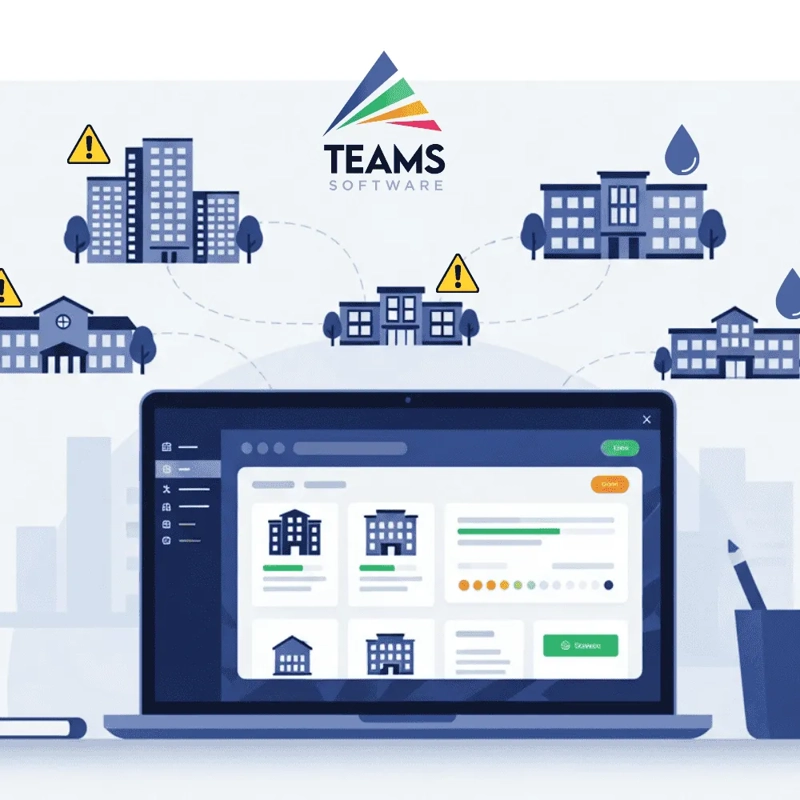
For many local authorities, that means moving away from fragmented PDFs and spreadsheets towards a single live system such as TEAMS Enterprise where asbestos data is centralised, and organisations have direct access, control of and ownership of records, whether asbestos management is handled internally, through external consultants, or both.
Why good asbestos data matters for local authorities
Poor asbestos data makes it hard to know where asbestos actually is, what condition it is in and whether anyone is at risk during day‑to‑day maintenance or planned works. It increases the chance of aborted jobs, unplanned spend and, in the worst case, uncontrolled disturbance because contractors are working from outdated or incomplete information.
For local authorities under pressure from regulators, insurers and elected members, good data underpins clear decision‑making on refurbishments, decarbonisation projects and routine maintenance. It also makes it far easier to demonstrate that reasonable steps have been taken to identify, assess and manage asbestos across the portfolio.
The core qualities of good asbestos data
Good asbestos data has a few essential qualities that work together. When one of these is missing, risk tends to creep back in.
Complete
A local authority’s asbestos register should cover every relevant asset and area, with known gaps clearly identified rather than hidden. That means having a clear picture not only of confirmed asbestos‑containing materials (ACMs), but also of “no access” areas and properties still awaiting survey, so nothing is falsely assumed to be safe.
Consistent
Data needs to be structured in a consistent way across schools, housing and corporate buildings, even when multiple consultancies have been involved over the years. Standardised fields, risk ratings and terminology make it possible to compare risks between buildings, filter by material type or priority and produce meaningful portfolio‑wide reports.
Current
Asbestos data quickly loses value when it is not kept up to date. Reinspection updates, removals, encapsulations and project outcomes need to be reflected promptly in the live register, so they become part of the working record, rather than being left in inboxes or attached to static PDF reports. When that process works well, maintenance teams, project managers and contractors can rely on the information in front of them when planning and carrying out works.
Traceable
Every record should tell a clear story: who created it, when, what evidence it is based on (for example, a survey or bulk sample result) and how it has changed over time. A strong audit trail supports internal governance and makes it easier to respond to questions from auditors, insurers or regulators about how particular decisions were made.
In practice, that means being able to see not only how a record has changed, but also whether the relevant reports and site information have actually been accessed before work begins.
Accessible
Good asbestos data is available to the right people at the right time. Asset managers, planners, housing officers and contractors should be able to access the latest asbestos information without having to chase emails, search shared drives or rely on outdated copies of reports. When live records are easy to search, filter and organise through a secure portal, they are far more likely to be used in day-to-day decision-making.
Actionable
Finally, asbestos data should support action, not just storage. That means being able to filter and sort by risk, location, building type or work status, surface higher-risk sites clearly, generate task lists; and build programmes of work based on real priorities. Actionable data turns a static register into a practical tool for managing risk over time.
Common asbestos data problems in local authorities
Many local authorities recognise that their asbestos data falls short of this ideal, often for entirely understandable reasons. Historic surveys may have been delivered in different formats, with each contractor using its own templates and coding. Over time, this can leave teams juggling multiple spreadsheets, PDF registers and legacy systems that do not talk to each other.
This patchwork makes it difficult to answer simple questions quickly, such as “How many high‑risk ACMs do we have in primary schools?” or “Which blocks are overdue for reinspection?”. It can also mask data gaps – for example, where no access rooms have been carried forward for years, or where removals completed on site have never been reflected in the central register.
How to turn fragmented data into good data
Moving from messy, fragmented data to “good” data is best approached as a structured process rather than a one-off clean-up. The first step is usually to centralise information from across the estate into a single, authoritative system of record, even if that system initially contains inconsistencies and gaps. Once everything is in one place, it becomes much easier to spot duplication, conflicting records and obvious holes.
Platforms such as TEAMS Enterprise are designed to help with exactly this: bringing survey updates, approved reports and portfolio-wide records together so authorities can work from a clearer baseline and address gaps or inconsistencies more systematically.
From there, standardising fields and categories - such as material types, locations and risk scores - helps bring older and newer data into line. Validation rules, bulk editing tools and clear workflows can then be used to clean and reconcile records, remove duplicates and flag anomalies for review by competent staff.
Linking survey, lab analysis, project work and reinspection outcomes into the same live register closes the loop, so the data reflects the full lifecycle of each ACM.
What good asbestos data looks like in practice
When asbestos data reaches this standard, the difference is visible in day‑to‑day operations. Planners can quickly generate lists of properties that meet certain criteria, such as buildings with high‑risk ACMs in communal areas, to inform investment decisions. Maintenance teams and contractors can check up‑to‑date asbestos information before attending site and confirm changes afterwards, confident that the central register will reflect what they find and do.
Senior leaders also benefit from clear portfolio‑level dashboards showing risk profiles, overdue reinspections and progress against action plans, supporting better discussions at board or committee level. In a well-structured system, teams are not waiting for someone to manually compile answers when auditors or regulators ask for evidence of how asbestos is being managed. Dashboards, filtered views and controlled client-side updates make it easier to see risk, monitor progress and keep the record current.
A practical first step
If your asbestos data does not yet look like this, the most useful first step is often a focused review of your current registers, survey outputs and reporting. That baseline shows how close you already are to good data - and where better structure, traceability, accessibility and live reporting would make the biggest difference.
For organisations managing complex estates, the right asbestos data platform can also make that improvement process far easier to sustain over time.


