

Released On 12th Aug 2026
Hot Weather and Legionella... Is Your Monitoring Programme Keeping Pace?
TD;LR
The UK is experiencing a clear long-term warming trend. The Met Office says 2025 was the warmest year in the UK temperature series dating back to 1884, with the four most recent years all among the five warmest recorded.
Hot weather does not automatically create a Legionella problem, but prolonged warm conditions can make suitable cold-water temperatures more difficult to maintain in some buildings. HSE states that Legionella bacteria multiply where water temperatures are between 20°C and 45°C, and that cold water should be stored and distributed below 20°C where temperature is used as a control measure.
The effect will vary according to the water system, building design, storage arrangements, insulation, water turnover and occupancy. Monitoring results should therefore be reviewed in the context of the individual site, its risk assessment and its written control scheme.
TEAMS helps water hygiene consultancies schedule monitoring, record temperatures against the correct assets and outlets, identify exceptions and track follow-up work across individual buildings and larger client portfolios.
The UK’s weather is becoming warmer
A single heatwave may create an immediate challenge for some buildings, but the wider issue is the direction of the UK’s climate. The Met Office’s State of the UK Climate 2025 report says 2025 was the warmest year in the UK series from 1884.
The same report says the decade from 2016 to 2025 was 0.51°C warmer than the 1991–2020 average and 1.33°C warmer than 1961–1990. It also says temperature extremes are becoming more frequent and more intense.
Individual summers will still vary. However, buildings are likely to face challenging warm weather conditions more often over time.
For water hygiene consultancies and their clients, that raises an important question... do existing monitoring records provide enough information to show how each water system responds during prolonged warm conditions?
Why warmer conditions can affect water systems
HSE says Legionella bacteria multiply where water temperatures are between 20°C and 45°C, and that cold water should be stored and distributed below 20°C where temperature is used to control risk.
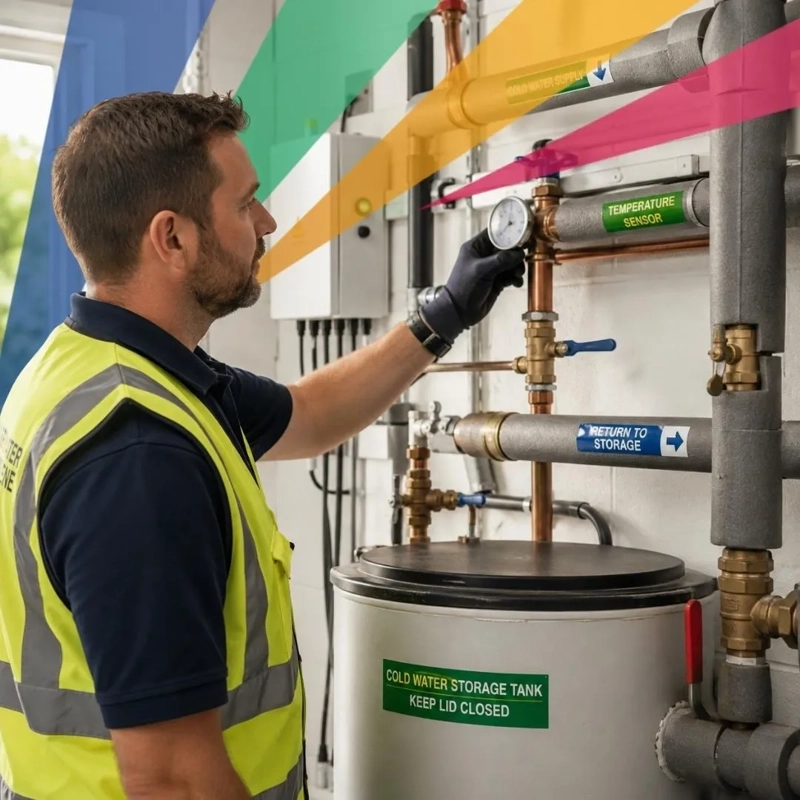
Prolonged warm weather can make this more difficult in some buildings. Cold water storage tanks and distribution pipework may be affected by high temperatures in roof spaces, plant rooms, service ducts and poorly ventilated areas, while inadequate insulation and heat from nearby services can also influence temperatures. HSE also highlights design measures such as adequate insulation and keeping tanks protected from temperature extremes.
The extent of any temperature change will depend on the building and its water system. A well-insulated system with regular turnover may respond differently from an older property with extensive pipework, exposed storage or lightly used outlets.
Occupancy can also shift during warm periods. Some premises become quieter because of holidays or seasonal closure, while hotels, leisure facilities and similar buildings may experience higher demand.
Warm weather should not be treated as proof that a system is inadequately controlled. Equally, an elevated cold water temperature should not be dismissed simply because outdoor temperatures are high. Any elevated result should be reviewed in the context of the system, building use and previous monitoring history.
Why temperature readings need context
A single temperature reading captures conditions at one location and one point in time. Its significance often becomes clearer when compared with previous results from the same outlet or asset.
One elevated cold water temperature may be an isolated exception. Repeated results from the same location during sustained warm conditions may indicate a pattern that needs closer review.
Historical records can also show whether the issue affects storage temperatures, a particular section of distribution pipework or several outlets supplied by the same part of the system. They may also show whether earlier corrective work was followed by improved results.
This context does not, by itself, determine the cause of the reading. It does provide a stronger evidence base for deciding whether further investigation is needed.
Can the programme reveal meaningful patterns?
There is no single hot weather monitoring procedure that will suit every building. Monitoring should be based on the site’s Legionella risk assessment and written control scheme. HSE says dutyholders should assess risk, put suitable precautions in place, monitor those precautions and keep appropriate records.
A period of sustained warm weather may, however, expose weaknesses in how monitoring information is collected, linked and reviewed.
A useful record should show:
- Where the reading was taken and which outlet or asset it relates to.
- When the activity was completed and who carried it out.
- Whether any unusual site conditions may have affected the result.
- Whether the reading generated a risk, task or further investigation.
- What action was taken and whether that action remains open.
- How the result compares with previous readings from the same location.
That creates something more useful than a collection of isolated temperature figures. It helps consultancies see whether a result is unusual for that outlet or part of a recurring seasonal pattern.
The real question is not whether monitoring frequencies should automatically increase whenever hot weather is forecast. It is whether the existing programme captures enough structured information to identify meaningful exceptions and support competent review.
Understanding patterns across client portfolios
Across a large client portfolio, the challenge is not just collecting monitoring information. It is seeing where repeated exceptions, unusual results and unresolved actions are concentrated.
A technician may notice that a roof space tank or a group of outlets regularly returns unusual readings. That wider pattern can be harder for managers to spot when information is spread across separate reports, spreadsheets and email chains.
The same applies when similar findings appear across several buildings. Those results may not share the same cause, but they still need to be visible to the people responsible for deciding what should be reviewed.
A portfolio-level view can help a consultancy see where attention may be needed most. It may show that one site is generating recurring exceptions, that follow-up work remains open, or that a previous intervention has not changed later results.
The purpose is not to draw technical conclusions from a dashboard. It is to make relevant information easier to review so competent people can decide what warrants investigation.
How TEAMS supports monitoring across client portfolios
TEAMS Legionella Monitoring is designed to support recurring monitoring work across individual buildings and wider client estates. It's monitoring module includes a mobile app, office planner system, recurring visits, integrated job tracking and programming controls.
Field teams can record temperatures and observations against existing assets and outlets, while office teams can review a structured monitoring history without having to assemble information from separate reports or spreadsheets. TEAMS' Online Log Book also stores approved assets, outlets, temperatures and risks, and allows regular temperature reporting through the portal or routine monitoring app workflows.
Approved information can also be shared through the Client Portal and Online Log Book, giving authorised clients access to current monitoring information. TEAMS describes the portal as a branded environment where clients can view and interact with approved site data.
TEAMS does not determine the cause of an elevated result or prescribe the technical response. It provides the records, structure and visibility needed to support review by the responsible people and their competent advisers.
Is your monitoring programme keeping pace?
A warmer UK climate does not create one new procedure for Legionella management. It does increase the importance of understanding how individual water systems respond during prolonged warm conditions.
Consultancies need records that show more than a series of separate temperature readings. They need to know where each result was recorded, how it compares with earlier findings and whether any resulting action was completed.
TEAMS brings monitoring schedules, site information, temperature records, risks and job status into one system, helping consultancies and clients review unusual results, follow through on actions and recognise longer-term patterns across buildings and portfolios.
Speak to the TEAMS team
See how TEAMS Legionella Monitoring, the Client Portal and the Online Log Book can support your consultancy and its clients.


