

Released On 11th Jun 2026
From spreadsheet chaos to a single source of truth for asbestos data
If your asbestos data lives in a tangle of spreadsheets, shared drives and email attachments, you are not alone. Many consultancies and duty‑holders still rely on manual processes that made sense when portfolios were smaller, but now creak under the weight of surveys, re‑inspections and remedial works.
In this post, we look at why spreadsheets eventually break down for asbestos management, what a “single source of truth” actually means in practice, and how moving to a dedicated system like TEAMS can transform both compliance and day‑to‑day efficiency.
The limits of spreadsheet‑based asbestos management
Spreadsheets are familiar, flexible and cheap. They are great for quick calculations and small, simple data sets. But as soon as you are managing hundreds of properties, thousands of items and multiple contractors, their weaknesses start to show.
Version control becomes a guessing game
Data structures drift over time
Columns get repurposed, new risk ratings are squeezed into free text, and formulas that used to calculate material and priority scores quietly break. Over months and years, your “master” sheet becomes a patchwork of inconsistent data that is hard to trust.
Reporting is slow and error‑prone
Generating a management report, a re‑inspection schedule or a board‑level summary typically means copying and pasting across workbooks, tweaking filters and hoping you did not miss anything. Every manual step is another chance for human error.
Collaboration is clunky and insecure
Emailing spreadsheets around or dropping them into generic shared folders makes it hard to control who can see what, especially when you need to separate sites, regions or clients. It also offers poor auditability if you ever need to demonstrate who changed which record and when.
At a certain scale, the problem is no longer “just be more careful with spreadsheets”... it is that the tool no longer fits the job.
What a “single source of truth” really means
“Single source of truth” can sound like a buzzword, but in asbestos management it has a very practical meaning.
One central database for all asbestos data
Every survey, inspection, sample and recommendation is stored once, in a structured way, with consistent fields and rules. Everyone, from surveyors to consultants to client‑side duty‑holders, is looking at the same underlying records.
Live, linked data instead of static files
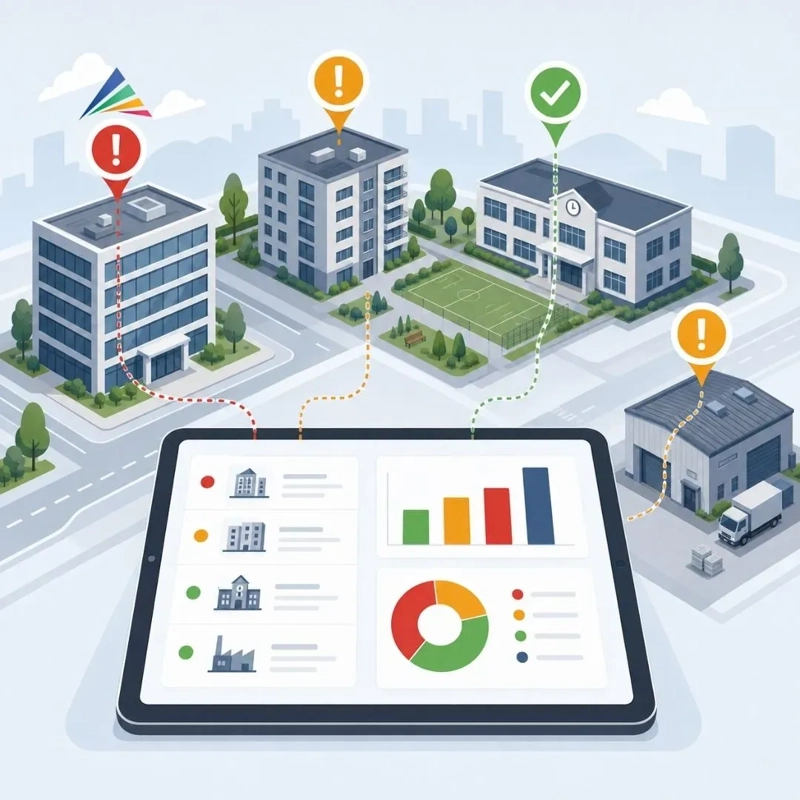
Items, locations, photos, lab results and actions are connected. Update a record in one place, and that change flows through to reports, portals and dashboards automatically. There is no need to manually update three other spreadsheets just to keep things in sync.
Clear roles and permissions
The system knows who can add, edit or approve data, and who can view or download reports. Internal staff, subcontractors and clients can all access the information they need without compromising security or governance.
Built‑in audit trail
Every change is logged. You can see who updated an item, when a recommendation was closed, or what the original survey finding was before a re‑inspection. This is invaluable when demonstrating compliance or investigating incidents.
In short, a single source of truth replaces a web of loosely related files with a robust, authoritative record of your asbestos position.
How moving away from spreadsheets improves compliance
Compliance is about more than having documents on file; it is about keeping risk information accurate, accessible and up to date. A dedicated system helps in several ways.
Fewer data gaps and contradictions
Standardised fields, controlled vocabularies and validation rules reduce the chance of missing risk scores, ambiguous locations or incomplete recommendations. When every site follows the same structure, portfolio‑level views are much more reliable.
Easier re‑inspections and ongoing management
When the system already knows where every asbestos‑containing material is, with its last inspection date and risk rating, creating a re‑inspection programme becomes a matter of running a filtered view... not trawling old reports and stitching data together by hand.
Better evidence for regulators and clients
Instead of scrambling to assemble a pack of spreadsheets and PDFs, you can show live data, clear audit trails and up‑to‑date management plans. This builds confidence with enforcing authorities and reassures clients that risk is being managed proactively.
Consistent reporting across the portfolio
Standard report templates pull from the same underlying data model. Whether you are generating a site‑level survey report or a high‑level risk summary for a housing association, the numbers and terminology line up.
The net result is that you spend less time firefighting data issues, and more time actually managing asbestos risk.
Operational gains for consultancies and duty‑holders
Shifting from spreadsheet chaos to a centralised platform also brings very tangible day‑to‑day benefits.
Faster turnaround from site to report
When surveyors capture data into structured forms and synchronise it directly into the central system, consultants can review and finalise reports much more quickly. There is no need to re‑key information or manually collate photos.
Clearer visibility of workload and priorities
Dashboards and work queues show upcoming re‑inspections, overdue actions and high‑risk items at a glance. Managers can allocate resources based on real‑time information instead of guesswork from static lists.
Fewer duplicated efforts
With a shared, live view of sites and items, different teams or contractors are less likely to duplicate surveys or miss available data. Everyone can see what has already been done and what still needs attention.
Better client experience
Instead of sending large spreadsheets and reports by email, you can provide client contacts with secure online access to their asbestos records. They can answer many of their own questions directly, reducing back‑and‑forth and support pressure.
For many organisations, these efficiency gains translate directly into more capacity, smoother audits and stronger long‑term client relationships.
Planning your move from spreadsheets to a centralised system
If you recognise the pain points above, the idea of moving everything into a new platform might feel daunting. The key is to treat it as a structured project rather than a one‑off import.
Start with a clear picture of your current data
List where asbestos information currently lives: spreadsheets, legacy systems, PDFs, lab reports. Identify which sources are authoritative, and where the biggest inconsistencies lie.
Define the core data model you need
Agree the standard fields you will use for items, locations, risk scoring, access issues and recommendations. Make sure this model supports both your technical requirements (e.g. UKAS processes) and what your clients want to see.
Prioritise high‑risk or high‑value portfolios first
You do not have to migrate everything at once. Begin with a portfolio where better data will have the greatest impact; for example, a large housing stock, education estate or complex industrial site.
Clean and validate as you migrate
Migration is the ideal time to fix known issues: ambiguous location names, duplicate records, missing scores. Use import tools and validation routines where possible, but also allow time for expert review.
Communicate the benefits to your team and clients
Staff and clients need to know what will change and why the new approach is better. Emphasise faster access to reliable information, simpler reporting, and reduced risk rather than just “new software”.
Handled well, the transition is not just a technical upgrade; it is a step change in how you manage asbestos information as a whole.
What this looks like with TEAMS
In TEAMS, the “single source of truth” idea is built into how the platform works:
- Surveyors and consultants capture data into structured templates rather than free‑form spreadsheets.
- All asbestos items, locations, photos and lab results feed into a centralised database that underpins survey reports, client portals and management dashboards.
- Clients can log in to see live asbestos information for their portfolios, rather than relying on emailed spreadsheets that go out of date as soon as they are sent.
- Updates made after re‑inspections or remedial works are reflected across the system, so everyone sees the current position without extra admin.
For organisations used to juggling multiple spreadsheets, the impact is often immediate: fewer discrepancies, faster reporting, and far greater confidence that the data you are acting on actually reflects reality on the ground. Contact us TODAY if you would like a demonstration of TEAMS Software and how it can help you manage you asbestos data.


